Gavinana. The Tuscan Mountain Village That Never Forgot.
Eight hundred and twenty metres above sea level, surrounded by chestnut forests, caught between stillness and one of the most dramatic moments in Florentine history: Gavinana is not a place you simply pass through. It's a place that holds on to you.

Gavinana in the Pistoian Apennines is one of the least crowded holiday destinations in Tuscany. The medieval village sits at 820 metres above sea level, around 65 kilometres north of Florence, and has a population of just under 800. There are no tourist coach queues here, no overrun piazzas. Instead: an intact village community, epic history and one of the most extraordinary church organs in Italy.
Where is Gavinana and what makes it special?
A Mountain Village That Slows Time Down
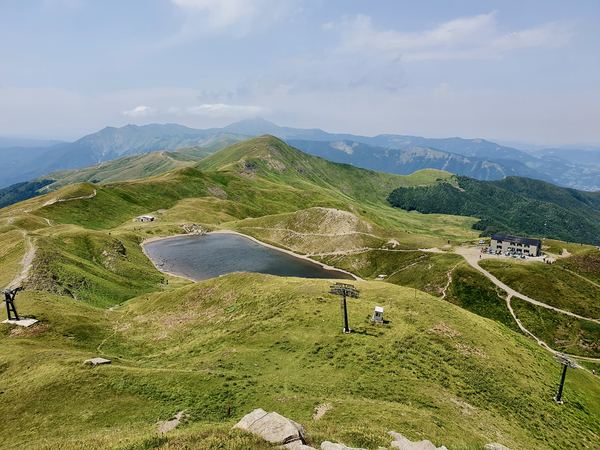
Gavinana sits at 820 metres in the Pistoian Apennines, 18 km north of Pistoia and about 65 km north of Florence. This medieval village of just under 800 inhabitants belongs to the municipality of San Marcello Piteglio and is the direct starting point for hikes into the Foresta del Teso (1,915 hectares of mixed forest) and up to the Rifugio del Montanaro (1,567 m). In midsummer, temperatures here are 8–10 °C cooler than in the valley, a natural advantage that travellers have valued for centuries. Gavinana on Google Maps
Narrow lanes, houses built from rough local stone, a central village square: Gavinana has kept its medieval character intact. No glossy boutiques, no mass tourism. Instead: chestnut trees as far as the eye can see, fresh mountain air even in the height of summer and a village community that is still genuinely a community.

What happened on 3 August 1530 in Gavinana?
The Day That Entered the Language
Gavinana would be a beautiful, quiet mountain village. Were it not for 3 August 1530.
On that day, the last troops of the Florentine Republic clashed here with the overwhelming army of Emperor Charles V. The Florentines were led by Francesco Ferrucci, a commander who had marched from Pisa through the Pistoian mountains in an attempt to relieve the besieged city of Florence. Against him stood more than 9,000 imperial mercenaries.
The battle was hopelessly unequal. After hours of fighting in scorching heat, Ferrucci was exhausted, gravely wounded and captured. The condottiere Fabrizio Maramaldo ordered Ferrucci killed despite his wounds. The dying Ferrucci gathered himself one last time and spoke — in the account of the historian Benedetto Varchi — the words that every Italian knows to this day:
Vile, tu uccidi un uomo morto.
"Coward, you are killing a dead man."
Francesco Ferrucci, as recorded by Benedetto Varchi · Battle of Gavinana, 3 August 1530
From the murderer's name, an insult was born. To this day, Italians say "fare il Maramaldo", meaning to bully the weak or the defeated. Francesco Ferrucci became a symbol of the Risorgimento in the 19th century. He even appears in the lyrics of the Inno di Mameli, Italy's national anthem.
Gavinana was razed to the ground after the defeat and immediately rebuilt. Today, the bronze equestrian statue on Piazza Francesco Ferrucci, erected in 1920, stands as a reminder of this moment in Tuscan history.

What to see and do in Gavinana
History, Culture and Stars
Museo Ferrucciano
Freshly reopened after eight years of renovation, the museum sits at the heart of the village square. Armour, lances, historical documents and impressive film reconstructions make a visit truly memorable. A scale model of the battlefield with miniature figures shows exactly how 3 August 1530 unfolded.

Pieve di Santa Maria Assunta
The most important church in the Pistoian mountains. Its centrepiece: the Agati-Tronci organ (three organs in one), with more than 2,000 pipes, some dating back to 1586. Three manuals, two pedal boards, 50 stops and the legendary "nightingale" effect. Anyone who loves classical music should not miss a concert here.
Manifestazioni Ferrucciane: the Festival on 3 August
Every year on 3 August, Gavinana transforms. The flag-bearers of the Florentine Republic march in, historical figures in Renaissance costume fill the streets, a historical tribunal tries a case from the 16th century. And then: Calcio Storico. This ancient Florentine football, one of the oldest ball sports in Europe, travels to only a handful of places. Gavinana is one of them, because of its deep connection to the history of Florence. Around 100 participants in authentic period costumes play the game as it was played in 1530.
Pian dei Termini Observatory
At around 1,000 metres, one of the most important observatories in Tuscany, with public observation evenings and the Parco delle Stelle, where the solar system is laid out to scale along a three-kilometre path.
Hiking & Nature
Walking trails from Gavinana lead directly into the Foresta del Teso, one of the finest mixed forests in the Tuscan Apennines (1,915 hectares, 795–1,732 m altitude). A two-hour walk brings you to the Rifugio del Montanaro at 1,567 metres, a perfect day-hike destination. The forest is home to deer, roe deer, wild boar and occasional wolves.
Events calendar
Something happening all year round
Why Gavinana is the ideal base for a Tuscany holiday
While Florence draws over 40,000 day-trippers daily in summer, Gavinana's piazza stays unhurried. And yet you are never far from everything the region has to offer:
Within reachDistances from Gavinana
| Destination | Distance | Drive |
|---|---|---|
| Pistoia | approx. 30 km | approx. 40 min |
| Florence | approx. 65 km | approx. 1 h 15 min |
| Lucca | approx. 70 km | approx. 1 h 15 min |
| Pisa | approx. 90 km | approx. 1 h 20 min |
| Bologna | approx. 100 km | approx. 1 h 30 min |
| Abetone (skiing) | approx. 20 km | approx. 30 min |
| Viareggio (coast) | approx. 85 km | approx. 1 h 15 min |
Frequently asked questions about Gavinana
The best time to visit Gavinana is May to October. At 820 m, temperatures stay at 22–26 °C even in midsummer, up to 10 °C cooler than Florence and the coast. The 3rd of August (Manifestazioni Ferrucciane) is particularly special. In October the chestnut forests of the Foresta del Teso turn golden.
The Museo Ferrucciano (reopened after 8 years of renovation), the Pieve di Santa Maria Assunta with the unique Agati-Tronci organ, and the Astronomical Observatory of Pian dei Termini. Every year on 3 August the Manifestazioni Ferrucciane festival takes place.
In the historic heart of Gavinana
Two apartments, one house, one address: il Nido and il Loft are just a stone's throw from Piazza Francesco Ferrucci, surrounded by history and stillness.